
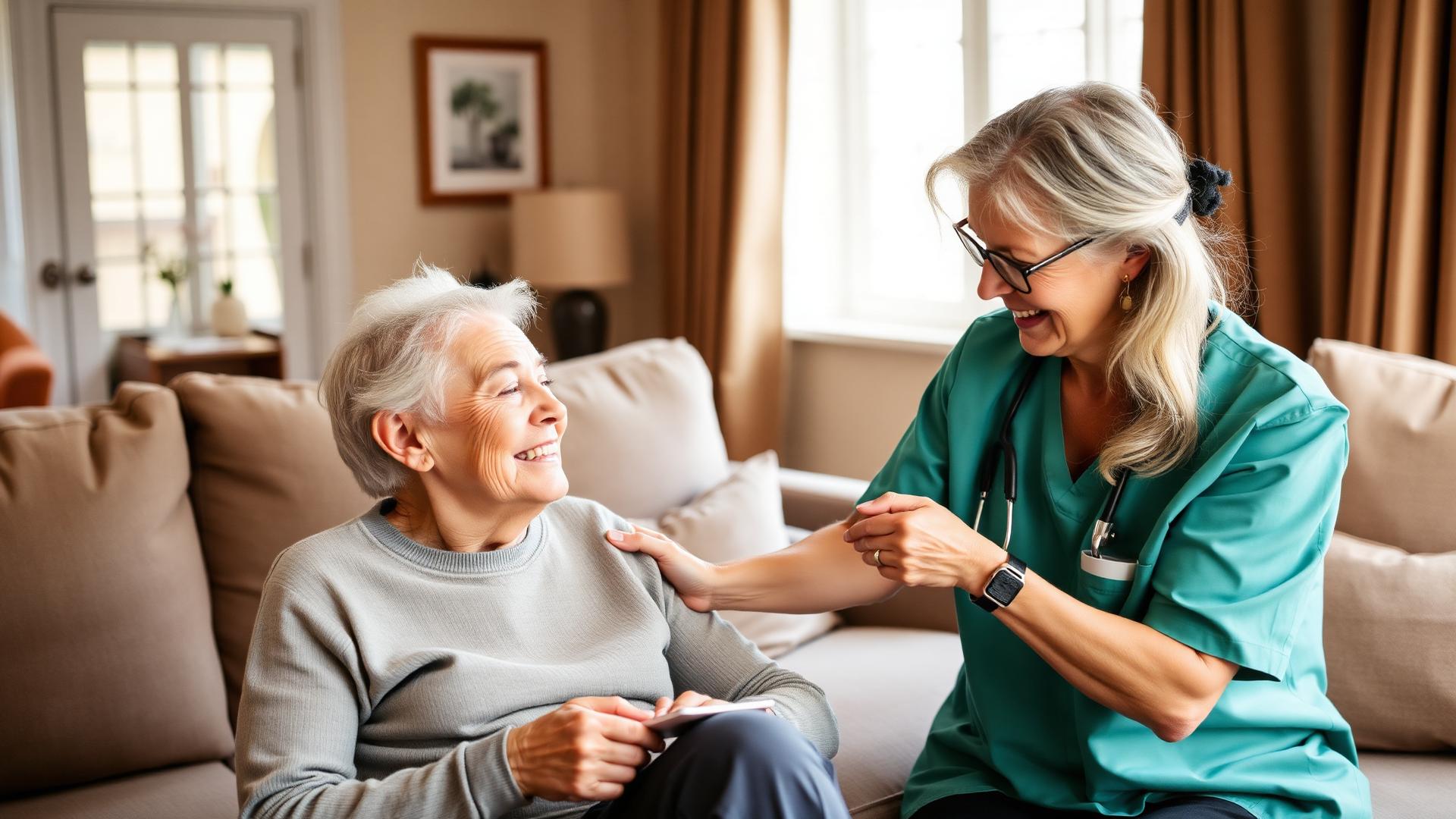
Comprehensive Guide to Non-Medical Home Care Assistance for Seniors and Families
Non-medical home care provides in-home support for daily life — bathing, dressing, mobility, meal prep, companionship, transportation, and medication reminders — without clinical procedures. In Coastal California it typically costs $45–$55 per hour or $200–$400 per day for 24-hour care, with payment options including LTCI, VA Aid & Attendance, IHSS, and Medicare's GUIDE Model for dementia families.
Key Takeaways
- Non-medical home care covers ADLs (bathing, dressing, mobility) and IADLs (cooking, errands, medication reminders) — not clinical procedures.
- Companion care directly reduces loneliness, a measurable health risk linked to cognitive decline, falls, and shortened lifespan.
- Cost depends on weekly hours, level of care, geography, and agency vs. direct hire — Coastal California rates run $45–$55/hr standard, $200–$400/day for 24-hour care.
- Traditional Medicare does not cover non-medical home care; LTCI, VA Aid & Attendance, IHSS (Medi-Cal), and Medicare's GUIDE Model for dementia families can help.
- Choose agencies that are CDSS-licensed, run background checks, carry insurance, and provide care manager oversight with backup coverage protocols.
When most people picture "home care," they picture a nurse — clipboard in hand, taking blood pressure, changing dressings, administering medication. That picture is real, and it has its place in the broader landscape of senior care. But it isn't actually the kind of care most seniors need most of the time.
The kind of care most seniors need most of the time is non-medical care: help with the rhythms of daily life. Bathing, dressing, breakfast, the morning walk, a steady hand on the way to the bathroom, someone to share the afternoon with, someone to make sure the medications are taken on time. These aren't clinical tasks. They're the texture of a life — and when a senior can't manage them alone, what they need isn't a hospital bed. They need a kind, capable person at home with them.
This guide is for families trying to understand what non-medical home care actually involves, how it differs from skilled nursing, what it costs, how to choose a provider, and how it adapts to specific conditions like Alzheimer's and Parkinson's. We've written it the way we'd talk it through with a family across the kitchen table — clearly, honestly, and without rushing.
If you'd rather have the conversation in person, you can always call or text us at (805) 900-0829, or reach out through our contact page.
What Are Non-Medical Home Care Services and How Do They Support Seniors?
Non-medical home care is exactly what it sounds like: support for a senior's daily life that doesn't involve clinical or medical procedures. Caregivers in a non-medical role do not give injections, change wound dressings, manage IV lines, or perform any task that legally requires a licensed nurse or therapist. What they do is everything else — and that "everything else" turns out to be where most of life actually happens.
A useful way to think about it: skilled nursing addresses what's gone wrong with the body. Non-medical care addresses how a person lives the rest of their day. Most seniors need much more of the second than the first. A senior recovering from a knee replacement might need a visiting nurse twice a week for clinical follow-up — but they need a caregiver every morning to help with bathing, breakfast, walking practice, meal prep, and getting through the day safely. The two services are complementary, not competing, and many families use both.
The defining qualities of good non-medical home care are presence, consistency, and skill at the human side of caregiving. A great caregiver isn't measured by clinical credentials. They're measured by how mom feels at the end of a shift — whether she's calmer, cleaner, fed, more connected, and more herself than she was when the day began.
For families newer to this conversation, our guide to senior in-home care solutions walks through the broader landscape of options.
Personal care is the hands-on, day-to-day support that helps a senior accomplish the basic tasks of self-care that have become difficult or unsafe to do alone. The standard list — what professionals call Activities of Daily Living, or ADLs — includes:
Bathing and showering. Helping a senior in and out of the shower or bath safely, washing where they can't reach, watching for skin issues, and doing all of this with patience and respect for privacy. This is one of the most sensitive parts of senior care, and the difference between a well-trained caregiver and a poorly trained one is enormous in this moment.
Dressing. Helping select weather-appropriate, dignified clothing and providing the hands-on assistance needed to put it on. Caregivers also help with shoes, socks, and the small fastenings that arthritic hands struggle with.
Grooming. Hair brushing and styling, oral care, denture care, nail care, shaving, skin care. The small dignities that matter enormously to how a person feels in their own body.
Toileting and continence support. Assistance with the bathroom, including the management of incontinence when needed. Done right, this preserves dignity. Done poorly, it damages it. The difference is training and temperament.
Mobility assistance. Helping a senior move safely from bed to chair, chair to standing, room to room. Recognizing fall risks before they become falls. Knowing the proper transfer techniques to protect both the senior and the caregiver.
Eating and meal assistance. Sitting with a senior who has difficulty with utensils, swallowing, or remembering to eat. Cutting food. Encouraging hydration. Noticing when appetite or eating patterns change — which can be one of the earliest signs of a developing problem.
Beyond ADLs, there's a second layer called Instrumental Activities of Daily Living, or IADLs — the tasks of running a life rather than running a body. Cooking, cleaning, laundry, managing the home, paying bills, taking medications on time, getting to appointments, using the phone, maintaining social connections. Most seniors begin needing help with IADLs before they need help with ADLs, and a good non-medical caregiver supports both layers as needed.
The way personal care is provided matters as much as whether it's provided. We've explored this in depth in our article on what four hours of care actually buys — the short version is that rushed care isn't really care.
Companion care is often the part of home care that family members underestimate, and it turns out to be one of the most consequential parts of the entire arrangement.
Loneliness in older adults is not a soft, abstract problem. It is, by every measure, a serious health risk. Sustained loneliness in seniors has been linked to cognitive decline, depression, increased fall risk, weakened immune function, cardiovascular disease, and shortened lifespan. The research on this is not subtle. A senior who lives alone with no consistent human contact is at higher risk of nearly every major health outcome than a senior with regular companionship.
Companion care directly addresses this. It includes:
Conversation and presence. Sitting and talking. Listening to stories — including the same story told for the eighth time, with the same warmth as the first. Asking about the photographs on the dresser. Letting silence be okay when silence is what's wanted.
Shared activities. Puzzles, card games, looking through old photos, reading aloud, watching a favorite show together, playing music, working on a hobby, gardening, baking. Not as a programmed activity but as a natural part of a shared afternoon.
Walks and outings. A short walk to the end of the block, a trip to the farmers market, a coffee at a favorite café, a visit to a friend, a drive along the coast. Movement and change of scene matter, and many seniors stop doing these things when they have no one to do them with.
Errands and transportation. Grocery shopping, pharmacy runs, post office trips, banking, hair appointments. The errands of a life, done with company instead of alone — or done at all, when alone they wouldn't happen.
Cognitive engagement. Conversation, gentle quizzing, reminiscence, current-events discussion, word games. Not as therapy but as the natural exercise of a still-functioning mind.
Connection to family. Helping a senior call their daughter, video-chat with grandchildren, write a birthday card, look at photos of a recent family event. The caregiver becomes a bridge to the family the senior can't reach as easily on their own.
For families who think their parent "just needs a little help," companion care is often where the surprise lives. Six months in, families notice that mom seems sharper, more engaged, calling more often, telling better stories. That's not the bath helping. That's the companionship.
How Much Does Non-Medical Home Care Cost and What Are Payment Options?
We're going to be straightforward about this. Families navigating senior care deserve honest information, not vague reassurances.
The cost of non-medical home care varies considerably, and rather than offer a national average that won't reflect your reality, here's what actually drives the number for any given family:
Total hours per week. This is the biggest single factor. Eight hours a week of companionship is one budget. Forty hours a week of personal care is another. Around-the-clock care is something else entirely. Most families are surprised at how quickly hours add up — a four-hour morning shift, five days a week, is already 80 hours a month.
Level of care required. A senior who needs full assistance with everything — bathing, transfers, two-person assistance, advanced dementia care — costs more per hour than a senior who primarily needs companionship and supervision. The training and skill required is meaningfully different.
Geography. Coastal California is among the higher-cost regions in the country. The Santa Barbara, Montecito, Westlake Village, and Calabasas markets reflect that. The labor costs of providing skilled, vetted, properly insured caregivers in these communities are real, and good agencies don't try to hide them.
Agency vs. direct hire. Hiring a caregiver directly is almost always cheaper per hour than working with a licensed agency. We've explored the trade-offs of this choice in depth in our article on hiring caregivers directly — the short version is that hourly rate is rarely the most important variable when you account for reliability, backup coverage, supervision, insurance, and consistency.
Specialized vs. general care. Dementia care, end-of-life support, post-surgical recovery, and care for medically complex seniors typically cost more than general companion care because they require more highly trained caregivers and more clinical oversight from a care manager.
Shift length. Very short shifts — under four hours — are difficult to staff with experienced caregivers, which is one of the reasons most quality agencies have minimums. Our article on the two-hour morning explains this in more depth.
Live-in vs. shift-based care. Some families consider live-in arrangements to manage costs, but live-in care still requires structured rest periods and additional caregivers to cover days off — so the savings are smaller than they appear, and the care quality can suffer if the structure isn't set up properly.
When we provide pricing to a family, we include a written care plan and a transparent cost breakdown. There are no surprise charges, no aggressive sales tactics, and no obligation to proceed. You can request a free assessment through our contact page or by calling (805) 900-0829.
This is one of the most-asked questions in senior care, and the honest answer is more nuanced than families usually expect.
Traditional Medicare. Generally does not cover non-medical home care. Medicare covers short-term, medically necessary skilled nursing or therapy services after a qualifying hospitalization, but the day-to-day support of personal care, companionship, and household help falls outside those benefits. This surprises many families, and it's worth understanding upfront.
Medicare Advantage (Part C). Some Medicare Advantage plans have begun offering limited in-home support benefits as supplemental services. The specifics vary by plan and region, and the benefits are usually modest, but it's worth checking your specific plan.
Long-term care insurance. If a senior purchased a long-term care policy years ago, those policies often cover non-medical home care, sometimes including 24-hour care, depending on the policy language. Many of these policies were sold in the 1990s and 2000s and are sitting unused in a drawer. We help families dig out their policies, interpret the language, and coordinate billing where applicable.
Veterans Aid and Attendance. Veterans and their surviving spouses may qualify for the VA's Aid and Attendance benefit, which provides a meaningful monthly supplement specifically intended for in-home care or assisted living. The application process takes time and patience, but for those who qualify, the benefit is substantial.
Medi-Cal (California Medicaid). California's Medicaid program covers some in-home services for eligible low-income seniors, primarily through the In-Home Supportive Services (IHSS) program. Eligibility rules are strict and the providers and hours are limited, but it's worth exploring for families who qualify.
Private long-term care annuities. Some annuity products include long-term care riders that can be used to fund home care. These tend to be specific to the policy and worth reviewing with a financial advisor.
Reverse mortgages and life insurance conversions. For seniors who own their home outright or hold significant life insurance, there are financial products that can convert those assets into care funding. These are major financial decisions and should be made with a qualified financial advisor or elder law attorney — not in haste and not under pressure.
Family contribution. In many cases, adult children pool resources to fund care for a parent, sometimes formalized through a written family agreement. We help families think through this conversation when it's helpful, including how to structure it without resentment.
We always encourage families to consult with an elder law attorney or financial advisor who specializes in senior care before making major financial decisions. We're happy to point you toward trusted local professionals — see our resources page for more.
How to Choose the Right Home Care Agency for Your Loved One?
This is the question families wrestle with most, and rightly so. Choosing who provides care for someone you love is one of the most consequential decisions a family will make.
When you're evaluating a home care agency, here's what should be in place. None of these are optional, and the quality of an agency's answers to these questions will tell you a great deal about what your experience will be a year from now.
Proper licensing. In California, non-medical home care agencies must be licensed by the California Department of Social Services. Verify the license number directly. An unlicensed agency is not a serious option, regardless of how warm the sales conversation feels.
Background and reference verification. Every caregiver should undergo criminal background checks (state and federal), motor vehicle record checks if they'll be driving, and reference verification from prior families or employers. "We trust our people" isn't a vetting process. Documentation is.
Bonding and insurance. The agency should carry workers' compensation, general liability, and professional liability coverage. This protects your loved one in the home and protects your family from significant legal and financial exposure if something goes wrong.
Caregiver training. Beyond the state-required minimums, ask what additional training the agency provides — dementia care, fall prevention, transfer techniques, infection control, end-of-life care, communication skills. The depth of the answer matters.
Care manager supervision. Quality agencies have a care manager — often a registered nurse or licensed social worker — who develops the care plan, visits the home regularly, and is reachable when something changes. Caregivers shouldn't be operating without supervision.
Backup coverage protocols. Every agency should have a clear, specific answer to: "What happens if our caregiver is sick on Tuesday morning?" The right answer is "we have backup caregivers available within hours, and your loved one has likely already met them during prior shifts." Vague reassurances are a red flag.
Caregiver retention. Ask how long the agency's caregivers typically stay. High turnover means your loved one will see a rotating cast of new faces, which is genuinely harmful for many seniors — especially those with dementia. Our article on caregiver consistency explains why this matters more than most families realize.
Caregiver-to-client matching. Ask how they decide who to assign to whom. The depth of the answer tells you whether matching is something the agency takes seriously or treats as a scheduling exercise.
Family communication systems. How does the family stay informed about care? Daily notes? A care portal? Regular check-ins from the care manager? Different families want different levels of communication, but the agency should have clear systems in place.
Transparent pricing. Written care plans, written cost estimates, no hidden fees, no aggressive contracts. If the pricing structure feels confusing or the contract feels coercive, walk away.
References from current clients. A good agency should be willing to put you in touch with current families who can speak to their experience. If they can't or won't, ask why.
Bringing care into the home introduces a new set of considerations that families don't always think about until something goes wrong. A few practical safety practices worth establishing from day one:
Medication storage. Keep medications in a secure, organized location, ideally a locked cabinet or pill organizer. Track refills carefully. Make sure the caregiver and family member share a clear understanding of which medications are taken when and by whom.
Valuables and documents. Important documents (insurance cards, identification, legal documents, financial records) should be stored securely, with the family knowing exactly where everything is. This protects everyone — the senior, the caregiver, and the agency. Reputable agencies have policies that prohibit caregivers from handling cash or sensitive financial matters without proper documentation and authorization.
Home access. Establish clear protocols around keys, alarm codes, and entry. Many families use lockboxes or smart locks that can be reset and audited.
Emergency contacts and protocols. A printed list of emergency contacts (family, primary physician, pharmacy, agency, 911 information) should be visible in the home. The caregiver should know exactly when to call which number.
Communication systems. A reliable phone — and ideally a backup — should always be accessible to both the senior and the caregiver. A medical alert pendant adds a layer of security for seniors who are alone for any portion of the day.
Home safety basics. Working smoke detectors, carbon monoxide detectors, fire extinguishers, and a first-aid kit. These should be checked and updated regularly.
Trust, but verify. Quality agencies don't take offense at families who use a discreet camera in common areas like a living room (after disclosing it to the caregiver and the agency, which is the legal and ethical path). They welcome the transparency. Be cautious about cameras in private spaces like bedrooms or bathrooms — these raise serious privacy and dignity concerns and are rarely appropriate.
Open communication. Families should feel comfortable raising concerns directly — to the caregiver, to the care manager, or to the agency leadership. A good agency creates a culture where small issues are surfaced early, before they become big issues.
What Daily Living Assistance Services Help Seniors Maintain Independence?
The phrase "maintaining independence" gets used a lot in senior care marketing, often without much depth behind it. Independence in this context doesn't mean doing everything alone. It means staying the author of your own day. The right support actually expands what a senior can do, rather than reducing them to a passive recipient of help.
Mobility — the ability to move safely from one place to another — is one of the most important predictors of how long a senior can age in place and how good their quality of life will be. Falls are the leading cause of injury and hospitalization in older adults, and once a senior has a serious fall, the trajectory often shifts dramatically.
Effective mobility assistance includes:
Safe transfers. Helping a senior move between bed, chair, toilet, shower, car, and standing position using proper body mechanics. Trained caregivers know transfer techniques that protect both the senior and themselves — and that prevent the kind of small slips that lead to big falls.
Walking support. Providing a steady arm or a gait belt during walks. Knowing when to encourage independence and when to step in. Recognizing when a senior is more unsteady than usual and adjusting accordingly.
Ambulatory device support. Helping seniors use walkers, canes, or wheelchairs effectively — and noticing when a device is becoming inadequate and a different one is needed.
Stairs and uneven surfaces. Negotiating stairs, curbs, thresholds, and outdoor terrain safely. Many home falls happen at transitions — a step into the garage, the threshold between rooms, a slightly raised rug edge.
Recognizing decline. A trained caregiver notices when a senior's gait changes, when they're using furniture for support more than usual, when their endurance drops, when they seem more hesitant. These observations can catch developing problems — UTIs, dehydration, medication issues, neurological changes — before they show up as a fall or a hospitalization.
Supporting movement, not replacing it. This is the subtle part. The wrong kind of help is the kind that does too much. A senior who isn't moving loses muscle mass quickly — much faster than a younger adult does. Good mobility assistance encourages safe movement rather than substituting for it. The goal isn't to do things for the senior. It's to make the things they want to do safer to do.
Most homes weren't designed for aging. Stairs, slippery floors, low toilets, dim lighting, narrow doorways, area rugs that catch a foot — the same home that worked beautifully for sixty years can become a hazard in the seventh or eighth decade. The good news is that many of the most important adaptations are simple and inexpensive.
A thoughtful home assessment typically considers:
Bathroom safety. Grab bars in the shower and beside the toilet. A non-slip bath mat. A shower chair or bench. A raised toilet seat. A handheld showerhead. These are inexpensive, easy to install, and dramatically reduce fall risk.
Lighting. Bright lighting throughout the home, especially in hallways, bathrooms, and stairways. Night lights along the path to the bathroom. Motion-activated lights for night-time bathroom trips.
Floor safety. Removing or securing area rugs. Repairing loose floorboards or tiles. Marking thresholds and steps with contrasting tape. Keeping walking paths clear of clutter, cords, and pet items.
Stairs. Sturdy handrails on both sides. Good lighting. Non-slip treads. For seniors with significant mobility limitations, a stair lift can be the difference between staying home and not.
Kitchen accessibility. Frequently used items at counter height, not in low cabinets or high shelves. A sturdy step stool if reaching is necessary. A stove with safety features or automatic shut-off, especially for seniors with memory changes.
Bedroom safety. A bed at the right height for safe transfers. A clear path to the bathroom. A working bedside lamp within easy reach. A medical alert pendant on the nightstand.
Door and entry safety. Wide enough doorways for walkers or wheelchairs. A no-step or low-step entry where possible. A bench near the entry for putting on or removing shoes.
Smart-home integrations. Voice-activated lights, thermostats, and emergency calls. Video doorbells. Stove sensors. Door sensors for seniors with wandering risk.
A good home care agency includes a home safety assessment as part of the initial care plan. Sometimes the most impactful thing we do in the first week isn't the care itself — it's spotting the loose rug or missing grab bar that was an emergency room visit waiting to happen.
How Is Non-Medical Home Care Tailored for Specific Conditions Like Alzheimer's and Parkinson's?
A good caregiver provides general support to any senior. A great caregiver tailors that support to the specific condition the senior is living with. Two of the most common conditions in our work are Alzheimer's disease (and other dementias) and Parkinson's disease. Both require non-medical support that's been thoughtfully adapted to the realities of the condition.
Dementia care at home is fundamentally different from general senior care. A senior with dementia is not simply forgetful — they're navigating a brain whose ability to interpret the world is changing, often in ways the senior themselves doesn't fully understand. Effective non-medical care for dementia rests on a handful of principles:
Consistency above all. The same caregiver, in the same home, following the same routine, day after day. Familiarity is the single most important factor in keeping someone with dementia calm and oriented. A revolving door of new faces is genuinely harmful, not just inconvenient. This is why we hold so firmly to our shift-length minimums — they're what make caregiver consistency possible.
A predictable routine. Wake-up at roughly the same time. Meals at the same times. Bath at the same time. Walks at the same time. Bedtime at the same time. Routine isn't rigidity — it's the scaffolding that holds a fading memory steady.
Calm redirection rather than correction. Arguing with a person with dementia about reality almost never helps and often escalates the distress. A trained caregiver redirects gently — moving the conversation, the activity, or the location, rather than trying to talk the senior out of a confusion. "You're right, mom, let's go look at the garden" works. "No, mom, dad died ten years ago" doesn't.
Recognizing the cause behind a behavior. When a senior with dementia becomes agitated, the agitation almost always has a reason — even when the senior can't articulate it. Hunger. Pain. A full bladder. Too much noise. Too many people in the room. A trained caregiver runs through the list of physical and environmental causes before assuming a behavior is "just the dementia."
Sundowning awareness. Many seniors with dementia experience increased agitation in the late afternoon and evening, a pattern called sundowning. Effective care anticipates this — adjusting lighting, reducing stimulation, simplifying the environment, and structuring the late afternoon to support rather than challenge cognitive load.
Nighttime safety. Wandering is one of the most serious risks in dementia care, and most wandering happens at night. For seniors with significant wandering risk, overnight care or 24-hour care often becomes essential — explored further in our guide to 24/7 in-home care.
Engagement, not stimulation. Familiar music, reminiscence, looking at old photos, simple tasks the senior can still do successfully. The goal isn't to stimulate cognition with novelty — it's to engage with the parts of the self that remain accessible.
Preserving dignity. Above all else. A person with dementia is still themselves. They still have preferences, still have a history, still deserve to be addressed by their name with warmth and respect, still benefit from being included in their own life rather than being managed around.
For families newly navigating a dementia diagnosis, our Alzheimer's and dementia care page walks through our specific approach in more detail.
Parkinson's disease creates a different set of challenges, and the non-medical support that helps a person with Parkinson's live well at home is meaningfully different from dementia care.
Medication timing. Parkinson's medication is unusually time-sensitive. Doses given even an hour late can result in significantly reduced mobility and increased symptoms. Caregivers supporting someone with Parkinson's are vigilant about medication windows in a way that few other conditions require.
Recognizing "on" and "off" times. People with Parkinson's experience periods when their medication is working well ("on" times) and periods when it's wearing off and symptoms worsen ("off" times). A trained caregiver schedules activities — walks, meals, showers — during "on" times and provides extra support during "off" times.
Mobility assistance. Parkinson's affects gait, balance, and the smoothness of movement. Caregivers know how to support a Parkinson's gait — including techniques for "freezing" episodes, when feet seem suddenly stuck to the floor — without rushing or adding pressure that makes the symptoms worse.
Fine motor support. Buttons, zippers, utensils, writing — the small motor tasks that Parkinson's affects early. Patience and discreet assistance, without taking over.
Speech and swallowing awareness. Parkinson's often affects speech volume, articulation, and swallowing safety. Caregivers know to slow down conversation, give time for response, and watch for signs of difficulty swallowing during meals.
Constipation and hydration. Parkinson's frequently causes severe constipation, which can become a medical issue if untreated. Caregivers support hydration, fiber intake, and routine in ways that make a real difference.
Mood and cognitive changes. Parkinson's often involves depression, anxiety, and cognitive changes alongside the motor symptoms. Caregivers offer steady emotional presence, gentle conversation, and watchful attention to changes in mood or thinking that should be communicated to the family or doctor.
Maximizing independence. People with Parkinson's are often acutely aware of their limitations and frustrated by them. Good care preserves as much autonomy as possible — giving time, providing only the help that's needed, and resisting the urge to do too much.
Other chronic conditions — stroke recovery, congestive heart failure, COPD, diabetes, cancer treatment, frailty, and end-stage chronic illness — each have their own profile of non-medical support needs. The principle is the same in each case: care that's been adapted to the specific condition is fundamentally better than generic senior care.
What Are the Benefits of 24/7 Availability and Family Communication in Home Care?
Beyond the direct care of the senior, two structural elements make a meaningful difference in how families experience home care: the availability of support around the clock, and the quality of communication between the agency and the family.
Around-the-clock care doesn't necessarily mean a caregiver is in the home 24 hours a day — though that level of coverage is available for seniors who need it. It means the agency itself is available 24 hours a day, with someone responsible answering the phone at any hour, with backup caregivers on call, and with care managers reachable when a situation changes.
This availability matters because senior care doesn't keep business hours. A fall happens at 2 a.m. A senior with dementia becomes agitated on Saturday night. A medication runs out on a Sunday. A family member out of state needs an update at 9 p.m. on a Tuesday. The question of who answers the phone in those moments — and how thoughtfully they answer it — is one of the most underappreciated parts of choosing an agency.
For seniors who need full continuous coverage, our guide to 24/7 in-home care walks through what that level of care actually involves in detail.
For everyone else, the relevant question is: how does the agency handle the moments when something unexpected happens? The right answer involves clear protocols, real human availability, and a culture of responsiveness — not a voicemail directing you to call back during business hours.
Home care happens in someone's home, often with family members spread across the country. Trust is the entire foundation of the arrangement, and trust depends on transparency.
Transparent pricing. A written care plan and written cost estimate before care begins. Clear explanations of what's included and what isn't. No surprise charges for things that should have been disclosed upfront. A clear and reasonable contract that doesn't lock families into terms they'll later regret. If the pricing structure feels confusing or evasive, it's a signal to ask harder questions — or to look elsewhere.
Daily care communication. Caregivers should document each shift: what the senior ate, how they slept, how they seemed, what activities happened, anything unusual. Some agencies use a paper log. The best ones use a secure digital portal that the family can read in real time, from anywhere.
Care manager check-ins. A real care manager reaches out proactively — not just when something is wrong. Weekly or bi-weekly check-ins from a care manager who actually knows the family and the senior is one of the strongest predictors of a high-quality care experience.
Responsive escalation. When the family raises a concern, it should be heard, addressed, and followed up on. When the caregiver notices something concerning, it should reach the family quickly. The communication should flow naturally in both directions, with no one having to chase.
Honest reporting. A good caregiver tells you the truth about how the day went, including the difficult parts. If mom was confused this afternoon, you should hear that. If she didn't finish her lunch, you should hear that. If she said something concerning, you should hear that. A care arrangement built only on positive reports isn't really an arrangement — it's a performance.
Cultural fit with the family. Different families want different levels of involvement. Some want a daily call. Others want a weekly summary unless something specific comes up. A good agency adapts to the family's preference rather than imposing a one-size-fits-all model.
The deeper truth is that quality home care requires a partnership — between the senior, the family, the caregiver, the care manager, and the agency. Each part of that partnership has a role, and the partnership only works when communication flows clearly through all of them.
A Final Word
Non-medical home care isn't a luxury. For most seniors who need help to stay home, it's the actual answer — the care that addresses how a person lives a day, not just how their body is performing in a clinical sense. Done well, it's quietly transformative. Mom is cleaner, fed, calmer, less lonely, less frightened. Her daughter sleeps at night. The whole family breathes a little easier.
If you're somewhere in the middle of figuring this out for someone you love, we want you to know two things.
First: you don't have to figure it out alone. We've been part of this conversation with hundreds of families across Santa Barbara County, Ventura County, and the LA coast, and we'd be glad to be part of yours — whether or not you ever become a client.
Second: the choice you're navigating deserves time, real conversation, and real expertise. There's no perfect answer, and whatever you decide will involve trade-offs. What matters most is that the decision is made carefully, with the senior's dignity and well-being at the center.
If you'd like to talk through what non-medical home care could look like for your family, you can reach us anytime. Call or text (805) 900-0829, or visit our contact page. We serve families across Montecito, Santa Barbara, Goleta, Carpinteria, Solvang, Santa Ynez, Buellton, Los Olivos, Camarillo, Thousand Oaks, Westlake Village, Newbury Park, Oak Park, Calabasas, Malibu, and the surrounding communities.
Whatever you decide, we hope this guide helped you decide it well.
Age Well Care is a boutique non-medical home care agency serving families across Santa Barbara County, Ventura County, and the LA coast. To learn more, visit our home page or read about the care we provide.
Frequently Asked Questions
Related Resources
Care Near You
Have Questions We Haven't Answered?
Our team is happy to discuss your specific situation — no pressure, just clarity.
Talk to Our Team